
Producer Comp: Draw vs Salary vs Commission, The Math
By Craig Pretzinger and Jason Feltman
Pay a new producer with a recoverable draw against commission. A straight salary traps the agency in fixed cost with no payback. Pure commission starves the producer before they can ramp. The draw bridges both gaps and limits the agency's downside.
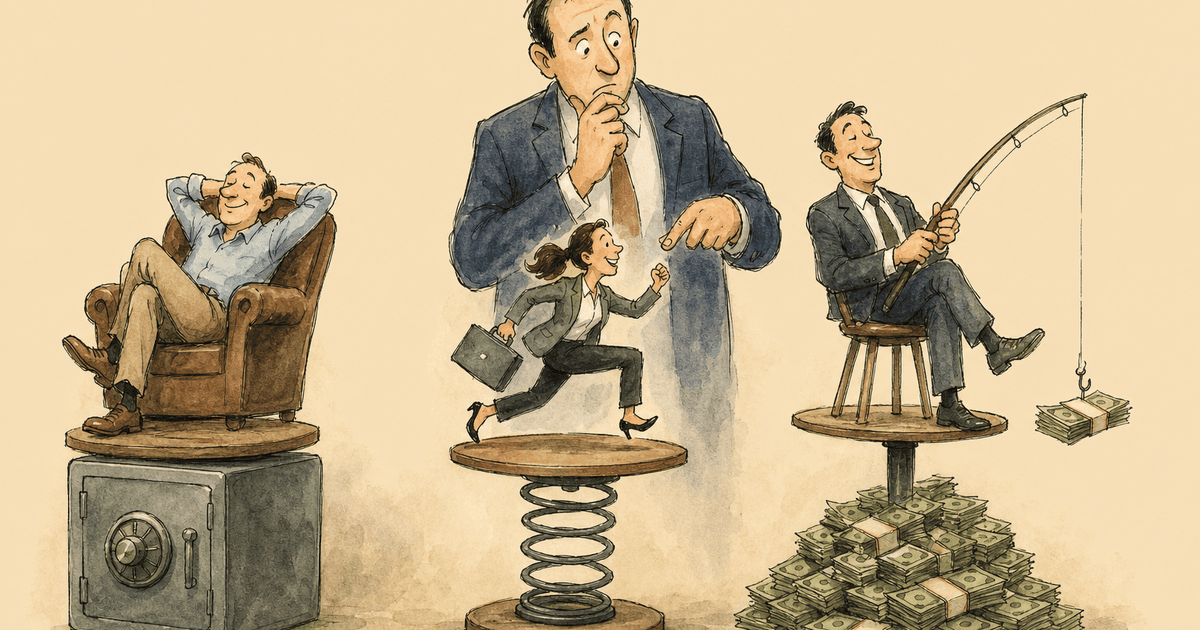
The structure you pick to pay a producer decides whether they ramp or wash out. Each model solves a different problem, and most agencies pick the wrong one for the wrong producer. That weight sits in your chest every Monday.
TL;DR
The four producer comp models are straight salary, pure commission, draw against commission, and salary plus commission. For a new producer with no book, a recoverable draw against commission is the safest structure for both sides: the producer gets a check every month while ramping, and the agency gets every dollar back once production covers the draw. A straight salary creates fixed cost with no payback mechanism and no incentive to prospect.
Pure commission starves a new producer inside 90 days. The gap between new business and renewal commission splits, not the base salary number, is what drives producer behavior toward growth or coasting.
What are the four ways to pay an insurance producer?
There are four base structures, plus every hybrid you can build between them. Each one carries a different weight for the agency's cash flow and a different shape for the producer's motivation.
Which producer pay model fits which stage?
Straight salary. The producer gets a flat paycheck, adjusted annually. Both sides know the number.
The problem: compensation and production get measured once a year, so the producer has no daily incentive to dial. This structure only works for a validated producer with an established book, not someone building from zero.
Pure commission. The producer earns a percentage of the premium they write, with no floor. Unlimited upside, zero fixed cost to the agency.
The downside is heavier than it looks. Few candidates can financially survive the ramp, and the agency still carries sales support, marketing, and E&O costs even if the producer never closes a deal. This model works for veterans with portable books, not new hires.
Draw against commission. The agency pays the producer a regular check, but that check is a recoverable advance against future commissions. When earned commissions exceed the draw, the agency cuts the producer the difference.
When the draw exceeds earned commissions, the producer owes the agency. This is the bridge that keeps a new producer alive during ramp while keeping the incentive intact.
Salary plus commission. A lower fixed base than straight salary, layered with commission splits. The base is the producer's to keep regardless of performance.
This is the most common structure at top agencies: the 2025 Big I Best Practices Study shows it is how the best firms attract talent. The tradeoff: the agency carries fixed cost with no recovery mechanism.
Most owners feel this truth after year 18. The structure that felt safest when you wrote the offer letter is often the one that costs the most when the producer stalls.
How does a draw against commission actually work?
A draw is not salary. It is a loan the agency makes against the producer's future commission earnings. Every month the producer gets a fixed check, typically $40,000 to $65,000 annualized for a new commercial lines producer.
Meanwhile they dial, quote, and start building a book. That range is benchmarked by the Insurance Journal Agency Salary Survey, which found producer total compensation rose 25.3% in 2025.
At the end of the measurement period, usually annually, you run the math. If the producer earned $55,000 in commission and received $50,000 in draw, you cut them a check for the $5,000 difference. If they earned $38,000 against a $50,000 draw, they carry a $12,000 deficit into the next period.
This is where most agencies lose their nerve. The deficit is growing, and the owner carries the weight of both the cash flow drain and the awkward monthly conversation. The play: set a hard validation timeline in the employment agreement before the first dial.
Twelve to eighteen months, measured on new business commission earned, not premium quoted. If the producer has not validated by month 18, the draw stops and the relationship converts or ends. No ambiguity, no emotional negotiation at month 17.
The draw is the safest vehicle for a new producer because it carries a built-in off-ramp. A salary has no off-ramp. You keep writing checks until you cannot anymore, and the severance conversation is harder because the producer was never told the money was conditional.
Why do most agencies fail with pure commission for new hires?
The math is seductive. You hire a producer, give them zero base, and tell them they eat what they kill. On paper, the agency carries no fixed cost.
In practice, the agency still carries the desk, the phone, the E&O, the marketing materials, the CSR support, the carrier appointments. It also carries the owner's time coaching someone who is burning through savings while trying to sell something that takes 60 to 90 days to close.
A new producer with no book needs twelve to eighteen months of disciplined activity before commissions cover their draw, according to MarshBerry's compensation study. On pure commission, they do not get twelve months.
They get three to six before the financial pressure forces them back to a W-2 job. The agency eats the sunk cost of training, licensing, and the accounts they almost closed.
The agencies that make pure commission work hire producers who already own a book and bring it with them. That is a recruiting play, not a development play.
If your strategy is to build producers from scratch, a pure commission structure is not a comp plan. It is a turnover plan with extra steps.
What does it actually cost when a producer washes out?
The visible cost is the draw you paid that never got recovered. A producer who washes out at month 14 on a $50,000 annualized draw has cost the agency roughly $58,000 in unrecovered comp, plus payroll taxes and benefits. That number stings because you can see it on the P&L.
The heavier cost sits in what you cannot see. SHRM research puts the total replacement cost of a bad hire at 50% to 200% of the employee's annual salary. That figure factors in recruiting fees, training time, lost accounts that the departing producer almost closed, staff morale drag, and the opportunity cost of the owner's time spent managing a failing ramp instead of developing the producers who are already working.
Run that against a $65,000 base salary hire and the washout lands between $32,500 and $130,000. For an agency doing $1.5 million in revenue at a 26.1% EBITDA margin, a single producer washout at the midpoint wipes out roughly 20% of annual profit.
This is why the comp structure decision carries more weight than the comp number decision. A $50,000 draw with a clear validation gate and a defined off-ramp protects the agency more than a $45,000 salary with no strings and no measurement.
How do you set the spread between new business and renewal commissions?
The single biggest behavioral lever in any producer comp plan is the gap between what you pay on new business and what you pay on renewals. MarshBerry's compensation research found that over half of agencies have no minimum annual new business production threshold that producers must meet to maintain their renewal percentage. Without that threshold, the renewal book becomes the compensation plan, and the producer stops hunting.
MarshBerry's research confirms that a measurable spread between new and renewal commission percentages is the single biggest behavioral lever in any comp plan. In practice, agencies that manage expenses well land on 25% to 35% commission on renewals and 40% to 50% on new business. The owner funds the gap during the producer's build phase.
The spread tells the producer what you value. A 25% renewal and 45% new business split says "go hunt." A 35% renewal and 40% new business split says "protect what you have." Neither is wrong. But you need to know which message you are sending before the producer reads it in the contract.
For a new producer on a draw, set the renewal percentage lower in year one and two, around 20%, with a step-up to 25% to 30% once they validate. The early gap forces the activity that builds the book. The step-up rewards the retention that keeps it.
How do the best agencies build a producer bench that lasts?
Most agency owners who have been at this for 15-plus years carry the same tension. They need producers to grow, but they have been burned by at least one hire who cost them money and months they will never get back. The reflex after that burn is to clamp down, go pure commission, and tell yourself the next producer needs to prove it before they earn a check.
That reflex is exactly what guarantees the next hire washes out the same way. If you have not read what a single bad producer hire actually costs your bottom line, the math is worse than you think.
What do the best agencies do differently?
The agencies that build sustainable producer benches do three things differently. First, they write the comp structure before they write the job description, matching the model to the producer's stage, not the owner's scar tissue. This is the same principle behind hiring for personality over experience: the structure shapes the behavior, and the behavior is what compounds or collapses.
Second, they build a measurable spread between new business and renewal commission that rewards hunting over coasting. Third, they set a hard validation gate at twelve to eighteen months, measured on commission earned, and they enforce it without emotion.
If you are a solo agent making your first producer hire, the comp structure is the single biggest variable. It decides whether that hire becomes a partner or a write-off.
You already know in your gut which of your producers is on the wrong structure. The question is whether you fix it before the next Monday morning pipeline review, or after the next one who walks.
Action step: Pull the last twelve months of producer P&Ls. For each producer, calculate their draw or salary cost against their gross commission generated. Any producer whose generated commission is below 70% of their draw for more than two consecutive quarters is on the wrong structure or in the wrong seat.
Fix the structure first. If the numbers do not move, fix the seat.