
What a Bad Hire Actually Costs Your P&C Agency Book
By Craig Pretzinger and Jason Feltman
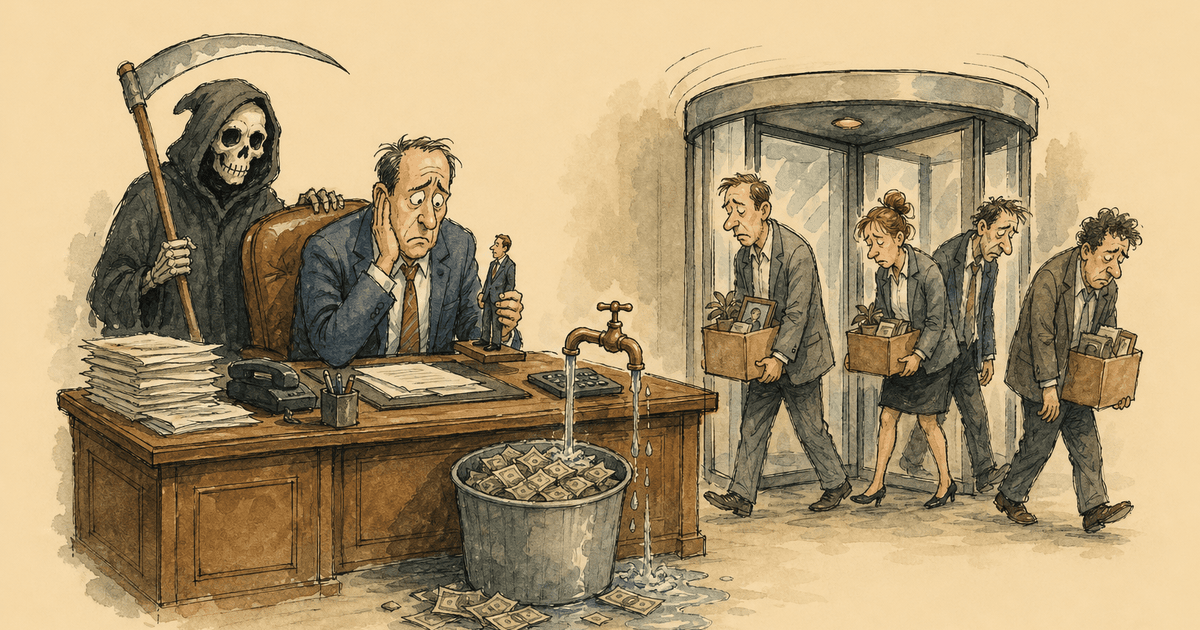
Treat north of $85,000 as the expected price of a failed producer hire, because the new-producer failure rate runs 70 to 80 percent. The draw and cost-per-hire are the visible part; the real loss is the $200,000 to $400,000 in new business a productive producer never wrote.
TL;DR
A failed producer hire costs a 9-person, $4.2M agency north of $85,000 once you count draw, training, lost leads, and owner time. The visible cost is the smallest part. The real loss is the new business a productive hire would have written instead.
How Many New Producers Actually Fail?
The new producer failure rate sits between 70 and 80 percent. Seven or eight out of every ten producers an agency owner hires won't make it past year two.
For a 9-person shop running $4.2M in premium, a single failed producer hire carries a real cost north of $85,000. That number adds up salary draw, training hours, lost opportunity cost on leads that went to someone who never closed them, and owner time sunk into managing a person who was never going to make it.
One agency owner on r/InsuranceAgent put it plainly. "Producers that don't work out are very expensive, not just because of the salary, but also all of the time that you devote to them."
What Does a Bad Hire Really Cost?
A fully productive producer generates $200,000 to $400,000 in annual revenue. An unproductive one generates nothing while consuming salary, benefits, and management attention for 12 to 18 months before you finally pull the plug.
Even before you factor in lost revenue, the up-front spend is real. Industry benchmarks put the average cost-per-hire near $4,700 across sectors, and that figure only covers recruiting and onboarding, not the months of draw and management time a producer consumes before the book validates. For a commissioned role where the new hire generates nothing for a year, the cost-per-hire is just the cover charge.
The real loss isn't what you spent. It's what you didn't earn.
Why Does the Failure Rate Stay So High?
The replacement math is getting harder, not easier. An estimated 400,000 insurance professionals are leaving the industry to retirement, according to U.S. Bureau of Labor Statistics data cited by RSM, which means a failed producer hire is not only a sunk cost, it is a seat you may struggle to refill.
And insurance-specific hiring data from CareerPlug shows the channels most agencies lean on (general job boards) deliver the weakest hire quality, while referrals and targeted sourcing punch far above their volume. Hire from the worst channel and you feed the 70 to 80 percent failure rate yourself.
What Did the Insurance Dudes Find?
Episode 679 lays out a 5-step system: paid traffic pipeline, group interviews, behavioral assessments, structured onboarding, and activity-based standards. The core argument: most agencies hire out of desperation after a producer quits, skip every gate, and repeat the cycle.
What Pattern Breaks the Failure Loop?
The agencies breaking out of the 70 to 80 percent failure rate share three traits. Here is what they do differently:
-
They never hire a producer until they have enough lead flow to feed them. A producer with nothing to sell is a guaranteed burnout (as one r/InsuranceAgent thread describes).
-
They use behavioral assessments post-hire to understand communication and motivation style, not as a hiring filter (source).
-
They structure compensation with a base or draw for the first 2 to 3 years while the book validates (as agents on r/InsuranceAgent describe).
None of this requires a bigger budget. It requires a system instead of a hunch.