
Producer Scorecard Template: Points, Prizes, and Coaching
By Craig Pretzinger and Jason Feltman
A producer scorecard template works when it weights effort, not just outcomes: one point per dial, three per contact, five per quote, ten per sale. Publish the leaderboard by 8am daily, reward the top weekly and monthly, and coach the bottom name privately on the single number driving the gap.
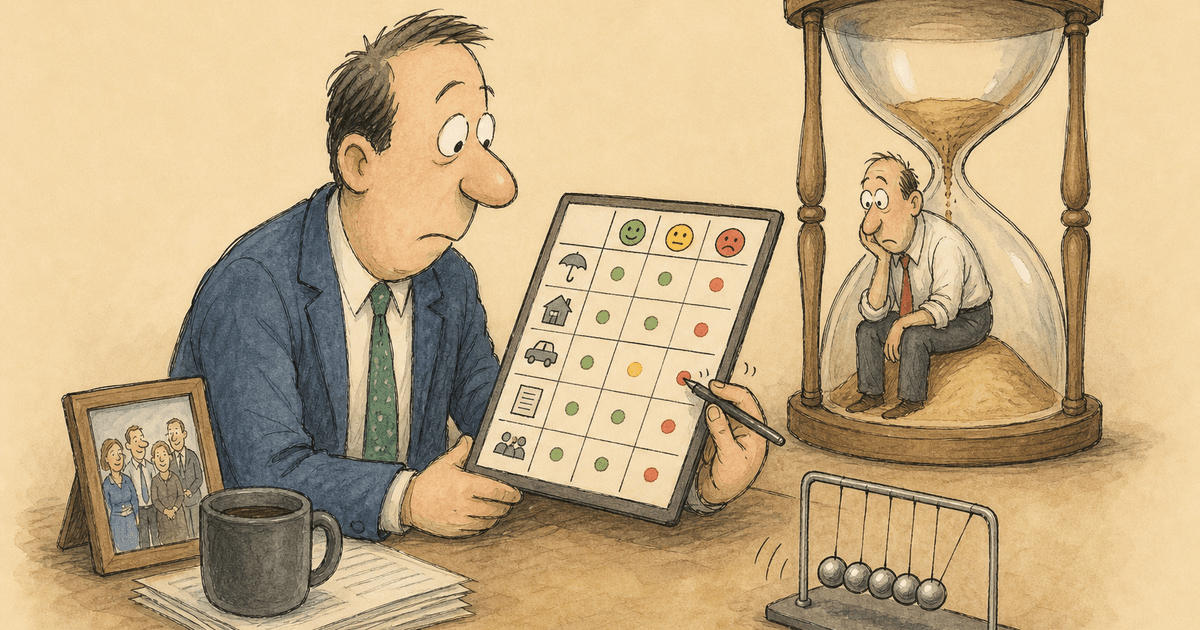
A producer scorecard template is a one-page point system: one point per dial, three per contact, five per quote, ten per sale. Post the board by 8am every day and the picture changes. You stop guessing who produced and start seeing it.
TL;DR
Gut feel is a lagging indicator with a smile. A weighted point scorecard turns daily effort into a single number you can see, rank, and coach the same week. The template below assigns points to dials, contacts, quotes, and sales, publishes a leaderboard every morning, and routes the bottom name into private coaching. Recognition does the heavy lifting: producers who feel seen stay longer and push harder. Steal the template, run it for thirty days, and watch the commission statement catch up.
Why Does a Point System Beat Raw Activity Counts?
Raw counts treat a dial and a sale as separate columns. A point system collapses them into one weighted number, so a grinder who books nothing and a closer who never dials both show up as gaps on the same board. That is the picture a raw activity report never gives you.
Sales research backs the frame. Harvard Business Review's work on sales metrics argues managers should run the numbers reps can control in real time, the leading indicators, not the lagging results. Premium and commission are history by the time you read them. Points scored yesterday are coachable today.
This template is the implementation layer for the five-number daily scorecard this blog has already made the case for. That post answers why activity beats gut feel. This one hands you the weights, the cadence, and the prize structure, and it extends the weekly metrics framework down to a daily rhythm.
What Goes Into the Scorecard Template?
Seven actions earn points. Weight them so outcomes dominate but effort still registers.
| Action | Points |
|---|---|
| Outbound dial | 1 |
| Contact (decision maker reached) | 3 |
| Quote delivered | 5 |
| Sale bound | 10 |
| Cross-sell appointment set | 5 |
| Review request made | 2 |
| Google review earned | 5 |
Watch the math work on a real day. A producer who logs 100 dials, 15 contacts, 5 quotes, and 1 bound sale banks 100 points for dials, 45 for contacts, 25 for quotes, and 10 for the sale: a 180-point day. A second producer with 40 dials, 12 contacts, 6 quotes, and 2 sales scores 40, 36, 30, and 20 for 126. The board now shows you the first producer is out-working the second while the second is out-closing the first, and each conversation writes itself.
How Do You Run the Scorecard Day to Day?
The values matter less than the cadence. Pick this exact rhythm and hold it.
- Publish yesterday's board by 8am, every day, visible to the whole team.
- Open the morning huddle with the top name and the one number to beat today.
- Award a small weekly prize: a gift card, lunch, the good parking spot.
- Award a meaningful monthly prize: 500 dollars cash, a paid day off, a trip credit.
- Pull the bottom name into a private session focused on one number, never a public callout.
The daily post is the non-negotiable. A board that shows up three days late is a report; a board at 8am is a scoreboard. Fold the readout into your weekly accountability meeting so the daily points roll up into a pattern you review once a week.
What Do You Do With the Bottom of the Leaderboard?
Coach them privately, on one number. If contacts are fine but quotes are thin, the problem is the transition question, not the work rate. One number, one fix, one week. Then re-check the board.
The leaderboard also carries the recognition load your annual review never will. In SHRM's survey of HR professionals, 54 percent said their recognition program helped them retain employees, and 82 percent said it lifted engagement. SHRM's newer research adds that a positive employee experience makes workers 68 percent less likely to consider leaving. A daily board that names the top performer is recognition on a repeating timer.
The private-coaching half matters just as much. SHRM's guidance on performance management warns that saving a year of criticism for one annual review dose fails the employee, and that improvement comes through steady coaching and support. Cornell's ILR school teaches the same shift in its performance management programs: away from the annual event, toward regular manager-employee conversations. The scorecard gives you a daily, low-stakes reason to have that conversation.
How Much Does This Matter for Retention and Pay?
Producer pay resets every year. Insurance Journal's 2026 Agency Salary Survey, built on nearly 500 agency responses, tracks how producer salaries and total compensation have shifted from 2022 through 2025. At market rates that move annually, a producer you cannot read is a line item you cannot defend. The board tells you in a week what the commission report admits in a quarter.
Top agencies already run this way. The Best Practices Study from Reagan Consulting and the Big I has benchmarked sales productivity at high-performing agencies since 1993; measured producers are the pattern, not the exception. Peers your size are posting boards like this every morning.
Two moves to make this week. Copy the seven-row table into a spreadsheet and back-fill last week from your dialer and management system. Then post the first board tomorrow at 8am and schedule the first private coaching session for Friday.
Sources cited in this analysis?
- SHRM: Recognition Programs Target Engagement
- SHRM: Positive Employee Experience and Turnover
- Harvard Business Review: Find the Right Metrics for Your Sales Team
- Insurance Journal: 2026 Agency Salary Survey
- SHRM: Manage Performance With Ongoing Feedback
- Cornell ILR Executive Education: Performance Management
- Reagan Consulting: Best Practices Study
Frequently Asked Questions
How many points should a sale be worth?
Ten, against one point per dial, is the ratio that keeps the board honest. Go higher and closers coast on two binds a week; go lower and grinders win without binding anything. Hold the 10-to-1 spread for the first quarter, then tune one value at a time.
Should the leaderboard be public to the whole team?
Yes, the board itself is public; only the coaching is private. Public rank is the recognition engine, and hiding it deletes the reward your top name earns every morning. The bottom name never gets called out in the huddle, which keeps the board motivating instead of humiliating.
What happens when a producer games the points?
Padding dials shows up fast because contacts and quotes do not move with them. When one column spikes and the downstream columns stay flat, the board itself flags the pattern within a week. Treat it as a coaching conversation about which numbers matter, then weight sales heavier if it repeats.
Can a scorecard replace one-on-one coaching?
No, the board finds the coaching conversation; it never has it for you. Points tell you who is behind and which number is driving the gap, and the private session does the actual fixing. Run the board daily and the one-on-one weekly, and neither replaces the other.