
How to Run a Weekly Producer Accountability Meeting
By Craig Pretzinger and Jason Feltman
What turns a status meeting into an accountability meeting is the close: every producer leaves committed to a specific, dated next action, not a recap. Hold it the same day weekly on a fixed agenda of leading activity, with standards in the group and coaching in a one-on-one.
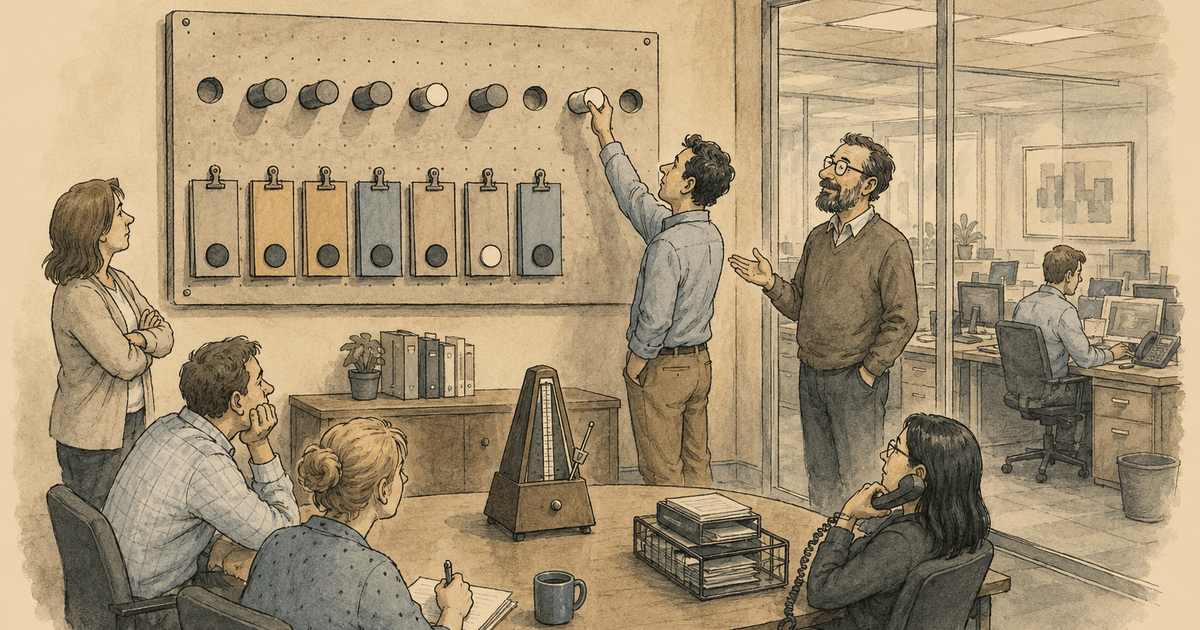
Most weekly producer meetings are status updates wearing an accountability costume. Everyone takes a turn recapping last week, the owner nods, nobody commits to anything specific, and the same producers drift for another seven days. The meeting happens on schedule and changes nothing.
A real accountability meeting is built differently. It is short, it runs on a fixed agenda, it looks at the handful of numbers that predict results rather than the ones that only confirm them.
It ends with each producer on the hook for a specific next action. The design is the whole game.
TL;DR
Run a weekly producer accountability meeting on a fixed, short agenda that reviews leading activity. It ends in forward commitments, not a backward status recap. Hold it the same day and time every week so the cadence is automatic.
Review the numbers that predict premium and surface the blockers. Have each producer commit to a specific next action.
Use the group meeting for standards and culture and a brief one-on-one for individual numbers and coaching. The difference between a status update and accountability is whether the meeting ends looking forward.
How do you run a weekly producer accountability meeting?
Keep it short, fixed, and forward-looking: same day and time each week, a standing agenda everyone knows, and a close where each producer commits to a next action. The cadence matters as much as the content.
A meeting that moves around the calendar or runs long gets resented and skipped. One that is predictable and tight becomes a habit the team plans around.
The structure is the discipline. When the agenda is fixed, nobody has to wonder what the meeting is for, preparation becomes automatic. The conversation stays on the few things that move the business instead of wherever the loudest update drags it.
What belongs on the weekly meeting agenda?
The leading activity, the blockers, and the commitments, in that order, kept tight. Insurance Journal's 2025 guidance on monitoring producer performance describes agenda-driven sales meetings that review specific sales activity: new business produced, lost business, hit ratio for each producer, prospect activity, and referrals obtained. Those are the items that tell you weeks in advance whether a producer is on track, so they anchor the agenda.
The agenda is not a place to re-derive which numbers matter; that is settled by your activity-versus-premium goal design before anyone walks in. The meeting reviews those agreed numbers, names what is getting in the way, and sets the next commitment. Keep the recap short so most of the time goes to blockers and what happens next.
Why does a weekly cadence beat the annual review for accountability?
Because leading indicators go quiet in days. A weekly meeting catches that drift while it is still cheap to fix. By the time an annual review shows a producer fell short, the year is gone.
By the time a quarterly review shows it, the quarter is gone. Activity, the early signal, can collapse in a week or two. Only a weekly look surfaces it in time to do anything.
This is also where the weekly meeting connects to the longer arc. It is the recurring checkpoint against the year-by-year validation scorecard: the schedule sets where a producer should be by each stage, and the weekly meeting is how you notice, early, when someone is sliding off it.
Should the accountability meeting be group or one-on-one?
Use both, for different jobs: the group meeting sets the standard and the culture. A short one-on-one handles each producer's individual numbers and coaching. The group setting is where shared expectations, wins, and the bar for activity get reinforced, and where a team holds itself to a visible standard.
Individual numbers and candid coaching belong in the one-on-one, not the group. Dissecting one producer's shortfall in front of the team rarely helps them and often costs you the room.
The pairing gives you both: collective standard in the group, personal accountability in private. The broader structure these meetings sit inside is the producer accountability system; the weekly meeting is the recurring ritual that keeps that system alive rather than the system itself.
How do you keep the meeting from turning into a status update?
End every producer on a specific, forward commitment rather than a recap of the past week. The single change that turns a status meeting into an accountability meeting is the last sentence: not what did you do, but what will you do by next week, and how will we know. A commitment is measurable and dated; a status report is neither.
The trap is letting the meeting become a series of monologues about last week. Cap the backward-looking recap, spend the time on blockers and decisions.
Make sure each producer leaves owning one concrete next action that gets checked at the next meeting. Accountability is the loop between the commitment made this week and the result reviewed next week.
Sources cited in this analysis?
- Insurance Journal: Sales Management and Monitoring Producer Performance (2025)
- Big 'I' and Reagan Consulting: 2025 Best Practices Study
Frequently Asked Questions
How long should a weekly producer meeting be?
Short enough to stay tight, usually 30 to 60 minutes for the group, plus a brief individual check-in. The exact length matters less than the discipline of keeping it fixed and not letting recaps consume it. A meeting that routinely runs long is usually a meeting without a real agenda.
What numbers should each producer bring?
The leading activity that predicts premium: new business produced, lost business, hit ratio, prospect activity, and referrals, per Insurance Journal's 2025 guidance. Those are the same indicators the activity goals are set on, so producers should arrive with them already in hand rather than assembling them in the room.
Should underperformance be addressed in the group meeting?
Set the standard in the group, and address an individual's shortfall in the one-on-one. Public dissection of one producer's numbers rarely improves performance and usually damages the team dynamic. The group reinforces the bar; the private conversation does the coaching.
How is this different from a producer accountability system?
The meeting is the recurring ritual inside the system, not the system itself. A producer accountability system defines the metrics, the compensation, and the standards; the weekly meeting is the cadence that operationalizes them. You need both: the system sets what accountability means, and the meeting is where it actually happens every week.