
Producer Sourcing Channel Mix That Actually Fills Roles
By Craig Pretzinger and Jason Feltman
One sourcing channel never fills a producer pipeline. Agencies that hire sellers consistently run a weighted mix of referrals, LinkedIn outreach, industry networks, and licensing schools, then track which channel feeds each stage of the funnel. Referrals deliver the highest share of hires that stay, which is why they anchor the mix.
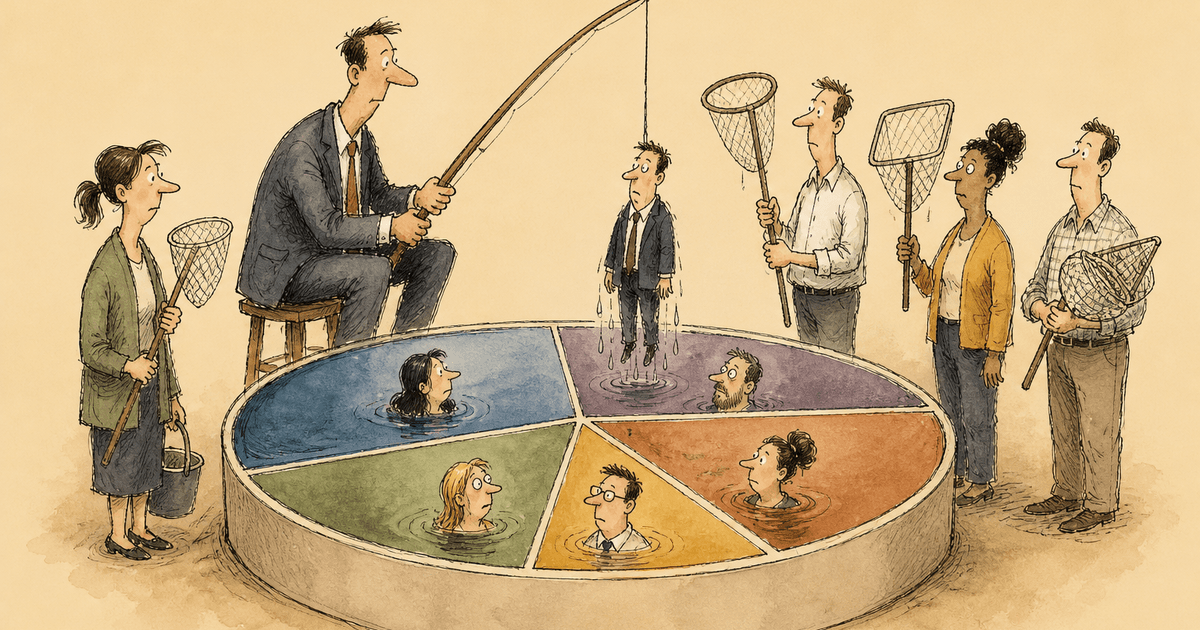
One job board will not fill your producer pipeline, and doubling the spend on it will not help either. You get an applicant list, not a bench of sellers. That gap is why most agencies stay short-staffed.
TL;DR
A producer pipeline is a sourcing mix, not a posting. Agencies that consistently hire sellers run a weighted blend of referrals, LinkedIn outreach, industry networks, and licensing schools, then measure which channel feeds each stage of the funnel. Referrals anchor the mix because they deliver the highest share of hires that actually stay. The fix is allocation, not another job post.
Key Takeaways
- Referrals drive more than 30 percent of all hires and 45 percent of internal hires, which is why they anchor the mix.
- The median insurance industry employee is 45, and a quarter of your customer-facing staff turns over each year.
- Close to 90 percent of new agents leave the industry within three years, so a wrong source is an expensive reset.
- Weight the mix around four channels, with roughly 40 percent of effort going to referrals.
- Tag every hire by source now, or you will keep guessing with your hiring budget.
Why does a single sourcing channel keep your producer pipeline empty?
You see a desk empty, so you post to one board and wait. The board sends resumes, but the people who can actually sell are rarely applying anywhere. They are already employed and producing somewhere else.
The insurance talent market makes this worse. The median age of insurance industry employees is 45, and a generation is retiring faster than new sellers enter, according to The Jonus Group. Meanwhile, 75 percent of insurance professionals say a lack of qualified candidates is the core problem. A single board competes for the same shrinking pool everyone else is fishing in. That is not a sourcing strategy; it is a lottery ticket with a resume attached.
What does a working producer sourcing mix actually look like?
A working mix stacks several channels so each one feeds a different slice of the pipeline. Insurance Marketing Hub makes this explicit for the independent channel, listing industry job boards, LinkedIn outreach, referrals, and relationships with licensing schools as one system rather than a single spear. Each channel chases a different candidate, and no single one can carry the whole bench.
That is the counter to the single-board habit this guide breaks down. Here is how a weighted mix breaks down for a typical agency.
| Channel | What it feeds | Share of effort |
|---|---|---|
| Referrals | Proven sellers, highest stay rate | 40 percent |
| LinkedIn outreach | Passive producers already selling | 25 percent |
| Industry networks and carrier reps | New entrants and career changers | 20 percent |
| Licensing schools and boards | Volume for the top of the funnel | 15 percent |
The percentages are a starting point, not a law. What matters is that no single cell carries the whole pipeline, because no single source can. A clear, specific producer job posting playbook still has a place inside that board cell, but it is one cell, not the whole board.
Why should referrals anchor the whole mix?
Referrals are the one channel that consistently beats every other on both volume and quality. Data from SHRM shows employee referrals deliver more than 30 percent of all hires and 45 percent of internal hires. They close faster and stay longer, which is exactly the profile a producer seat needs.
The reason is boring and real. A referred candidate is pre-vetted by someone whose own reputation is on the line. Your top producer will not stake their name on a warm body. So the referrals that do come through are already filtered for the one thing a resume cannot show, which is whether this person can actually sit in a room and sell.
An owner running a six-person shop put it the plainest way I have heard it: "Every producer I have kept came from someone I already knew. Every one I lost came from a job board." That is not data. That is three producer churn cycles talking.
How do you measure which channel is actually working?
Most agencies cannot answer that question because they never attached a source tag to a single hire. If you cannot say which channel produced your last three producers, you are guessing with your hiring budget.
Track the funnel by source, the same way you track leads. Record where the candidate came from at first contact, then measure response rate, show rate, offer rate, and stay rate per channel. SHRM's own quality-of-hire guidance points to exactly this, measuring candidate quality by sourcing channel and referral rate by recruiter. The channel that wins on volume is not always the channel that wins on retention, and those are two different scores.
Why do new sellers wash out if the mix is wrong?
The stakes are higher than a slow pipeline. Filling the seat with the wrong channel has a compounding cost, because close to 90 percent of new insurance agents leave the industry within three years. Every time that happens, the sourcing clock restarts and the seat empties again.
This is why the mix matters at the front end, and why a wrong-source hire is not a cheap mistake to walk off. Turnover is a real cost line, not a soft metric. The Cornell ILR School's Institute for Compensation Studies researches sales compensation and turnover cost, and the pattern is consistent: a churned producer costs far more than the screening time a good mix would have bought. When you stack that on what a bad hire actually costs an agency, the sourcing fix pays for itself before the first renewal.
The producer role itself is built on sourcing. O*NET lists "seek out new clients and develop clientele by networking" as a core task of the insurance sales agent occupation. You are hiring someone whose entire job is to find people, so a candidate who only shows up when a job post reaches them is already out of position before they start.
What is the one move to rebalance your mix this week?
You do not need to rebuild everything at once. You need to stop pretending one channel is a strategy and start weighting what you already have.
First, tag your last three producer hires by source. If you cannot, that is the work. Second, write down one ask you can make to your best producer today, the one that turns their network into your bench. Then send it. The mix grows one weighted move at a time, and the channel you ignore is the one your competitors are already harvesting.
Sources cited in this analysis?
The claims in this post draw from SHRM's hiring data on referrals, Insurance Marketing Hub's multi-channel recruiting framework, and The Jonus Group's talent-shortage research. O*NET supplied the occupational profile, and the Big I and Reagan Consulting 2025 Best Practices Study anchored the attrition figure. Cornell's ILR School grounded the turnover-cost point.
Frequently Asked Questions
What is the best channel for sourcing insurance producers?
Referrals are the anchor channel. SHRM data shows employee referrals deliver more than 30 percent of all hires and 45 percent of internal hires. They close faster and stay longer than board applicants. That said, no single channel fills a pipeline, which is why referrals are weighted highest rather than run alone.
How many sourcing channels should an agency run?
Run four or five simultaneously rather than one. Referrals, LinkedIn outreach, industry networks, and licensing schools each feed a different stage of the funnel. Insurance Journal's fork framework and Insurance Marketing Hub's multi-channel playbook both hold that the mix, not any single prong, is what keeps the bench full.
How do I know which sourcing channel is performing?
Tag every hire by its source at first contact, then measure response, show, offer, and retention rate per channel. SHRM's quality-of-hire guidance recommends exactly this, breaking candidate quality down by sourcing channel and referral rate by recruiter. Volume and retention are separate scores.
Why do producers sourced from one board keep washing out?
A single board competes for a shrinking, retiring talent pool, and the sellers you want are not applying anywhere. The result is hires that churn back out, with close to 90 percent of new agents leaving within three years. The producer role is itself sourcing-driven, so a board-only hire is already out of position.