
Closer Talk Time: The One KPI That Predicts Closed Business
By Craig Pretzinger and Jason Feltman
A closer needs four to six hours of active talk time a day measured by the dialer, not self-reported. Talk time without quoted households means they are stuck in conversation. Quoted households without talk time means they are quoting without selling. Track both together and you can predict closed business weeks before premium lands.
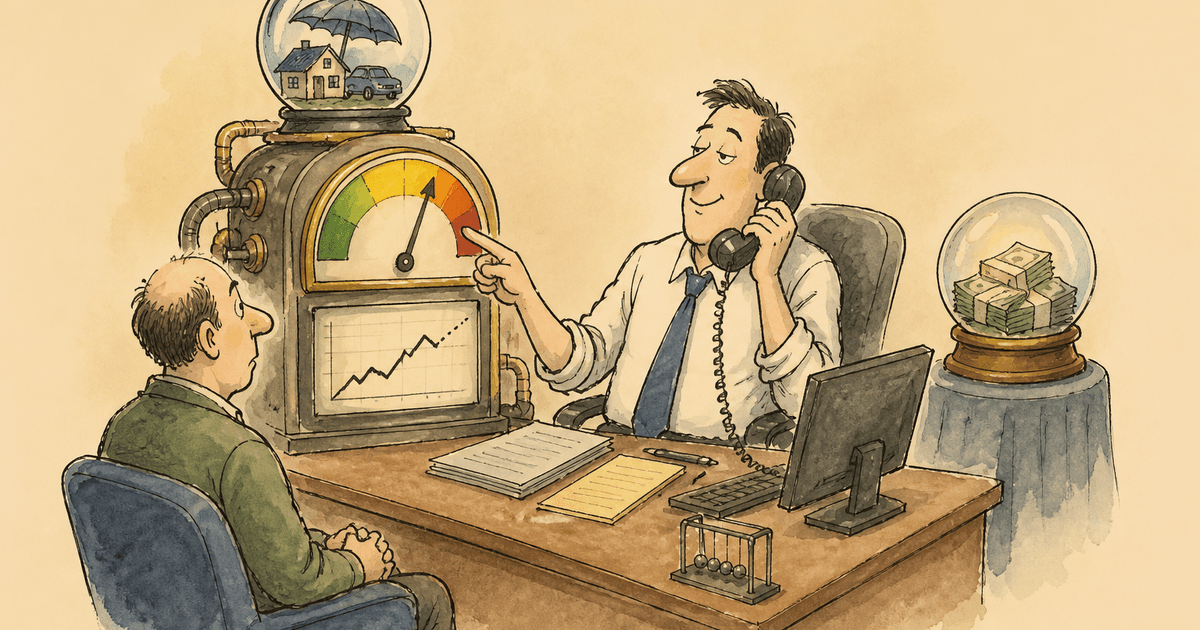
A closer who talks for six hours and quotes nothing is not closing. A closer who quotes all day and talks for two hours is not selling. The gap between those two numbers is where your pipeline either compounds or quietly bleeds to death.
That single input metric, talk time, predicts closed business before premium ever lands. Track it and you stop discovering a dead month after it is already over.
TL;DR
Closer talk time is the leading indicator that your book runs on correctly. The target is four to six hours of active, dialer-measured talk time a day, paired with eight to ten quoted households. Neither number works alone.
Talk time without quotes means your closer is stuck in conversation and not moving prospects to a decision. Quotes without talk time means they are pushing paper and not actually selling. When both numbers move together, you can predict the closed business that shows up four to six weeks later.
The fix is simple enough. Measure the input with the dialer, not a self-reported guess, and coach the gap weekly.
Key Takeaways
- Four to six hours of active dialer-measured talk time a day is the floor for a closer.
- Eight to ten quoted households a day is the output that must sit next to the talk time.
- Talk time without quotes means a closer is stuck in unresolved conversation.
- Quotes without talk time means a closer is quoting without actually selling.
- Watch the input weekly and you see the miss before the premium number lands four to six weeks later.
Why does talk time matter more than premium written?
Because premium is a lagging indicator and talk time is a leading one. A producer can show you a great month and be three weeks into quietly losing the next one. Premium tells you what already happened. Talk time tells you what is about to.
The Big I Virtual University names three ratios every agent has to track: retention, closing, and effective production time. Effective production time is the talk-time number, the hours actually spent in live sales conversation. Most agencies track the first two and skip the third, which is the one that drives the other two.
Insurance Journal's Agency Performance Playbook lands the same point. Producers in average agencies spend the day managing instead of selling. The fix is visibility into the one number that drives productivity, then tying it to a measurable outcome. The number is the talk time. The outcome is the premium.
"I look at the premium number and I am always three weeks behind the problem. By the time I can see it, the quarter is already gone."
That is how most owners say it out loud. The instinct is correct and it is aimed at the wrong number.
What is a healthy talk time target for a closer?
Four to six hours of active talk time a day is the floor. Active means the dialer counted it, not the closer estimated it. Hold time, after-call work, and idle do not count. The closer who says they were on the phone all day is usually at two hours of actual talk.
Six hours is a high performer. Seven is unsustainable and usually means the closer is also the one dialing, which is not their job. This is the same role separation covered in our daily dial math breakdown, where the caller does the dialing and the closer stays in close mode.
Next to the talk time, track eight to ten quoted households a day. A quoted household means a full quote with a premium delivered to the actual decision maker. At eight to ten quotes a day and a 20 percent close rate, that is two new households a day, ten a week. The math only works if both numbers are real.
The Reagan Consulting Best Practices Study has benchmarked top-performing agencies for decades. The trait they share is not a better closer. It is the discipline of separating roles and measuring the input at the right cost level.
How do you read talk time and quotes together?
Read them as a pair, because each one alone lies. The matrix is simple and it catches the failure before the premium does.
Talk time high, quotes low means the closer is stuck. They are spending the full day in conversation and never moving a prospect to a decision. That is an objection-handling or an offer problem, not an effort problem.
Talk time low, quotes high means the closer is quoting without selling. They are rushing through quotes, pushing paper, and avoiding the hard close. That is a call-reluctance problem dressed up as a busy day.
Both high is the target. Both low means the closer is avoiding the phone entirely, and the scorecard in our activity vs premium goals post already covers how to surface that gap weekly.
Why does the dialer have to measure it, not the producer?
Because self-reported talk time is a wish, not a metric. Every closer overestimates how much of the day was spent actually selling. The dialer logs the real number from the call records, down to the second, with no opinion.
Cornell's ILR School frames performance-based pay around inputs the worker controls, not outputs they cannot. Talk time is an input your closer controls directly. Premium is an output that lags behind weeks of market, rate, and renewal timing.
On top of that, the top Best Practices agencies profiled by Independent Agent Magazine share a daily scorecard habit. The number on the board is the dialer-measured talk time, not a self-reported estimate. That is what makes the morning huddle honest.
The point of measuring talk time is not to punish a quiet day. It is to see the quiet day on the same day it happens, while there is still time to recover the week.
What should you do when talk time stalls but quotes do not?
Coach it immediately, because the longer it runs the more lead spend you burn on conversations that never close. Sit down with the closer, pull a call recording, and find where the conversation stalls.
If the stall is at the close, drill the assumptive close and the objection loop from the daily huddle. If the stall is at the quote, the closer is not collecting the information that gets a premium out. Fix the process, not the person.
The lead cost makes it urgent. Real-time internet leads run four to eight dollars each, so a closer who talks for six hours and quotes nothing is turning that spend into nothing. We covered how that math compounds in our TeleTeam caller dashboard post, where the input metric is the first thing on the board.
Watch the input weekly and the miss shows up weeks before the premium number would have told you. That is the entire case for talk time as the KPI you manage around.
Sources cited in this analysis?
- Big I Virtual University, 3 Sales Measurements Every Agent Must Understand -- retention ratio, closing ratio, and effective production time methodology.
- Insurance Journal Research, The Agency Performance Playbook (2026) -- framework for diagnosing producer-productivity constraints and tying activity to a measurable outcome.
- Reagan Consulting, Best Practices Study -- multi-decade agency productivity benchmark with role-separation data.
- Insurance Information Institute, Careers and Employment -- industry employment scale for agencies.
- O*NET, Insurance Sales Agents -- occupational tasks and the phone-heavy nature of sales-agent work.
- Cornell University ILR School, Institute for Compensation Studies Glossary -- performance-based compensation principles.
- Independent Agent Magazine, Meet 7 Best Practices Agencies (2026) -- daily scorecard habits of top agencies.
Frequently Asked Questions
Is talk time the same thing as time on the dialer?
No. Talk time is live conversation with a prospect. Time on the dialer counts hold, ringing, after-call work, and idle. A closer can log eight hours on the dialer and two hours of actual talk. The dialer reports talk time separately, and that is the number you manage.
How many quoted households should a closer produce each day?
Eight to ten, at a floor of four to six hours of talk time. Below five quotes a day the closer is getting bad transfers, avoiding the phone, or stuck in unresolved objections. The two numbers have to be read together, never in isolation.
Should I pay commission on talk time or on premium?
On premium, always. Talk time is a leading indicator you manage and coach, not a payout basis. Cornell's ILR School frames pay around controllable inputs, but commission still settles on the output. Use talk time to see the miss early and correct it before the commission lands.
What dialer metric should I put on the board first?
Talk time. It is the one number that predicts the rest and the one closers most often inflate when they self-report. Put dialer-measured talk time, quoted households, and premium on one board. When talk time drops, the premium drop follows in four to six weeks.