
Aged Lead Unit Economics: What Cheap Data Really Costs
By Craig Pretzinger and Jason Feltman
Aged leads trade a cheap sticker price for expensive labor. They need eight to ten times the dials, convert at a fraction of the rate, and drag your effective cost per lead from around six dollars to roughly thirteen before you factor the compliance exposure. The cheap data is not the savings it looks like.
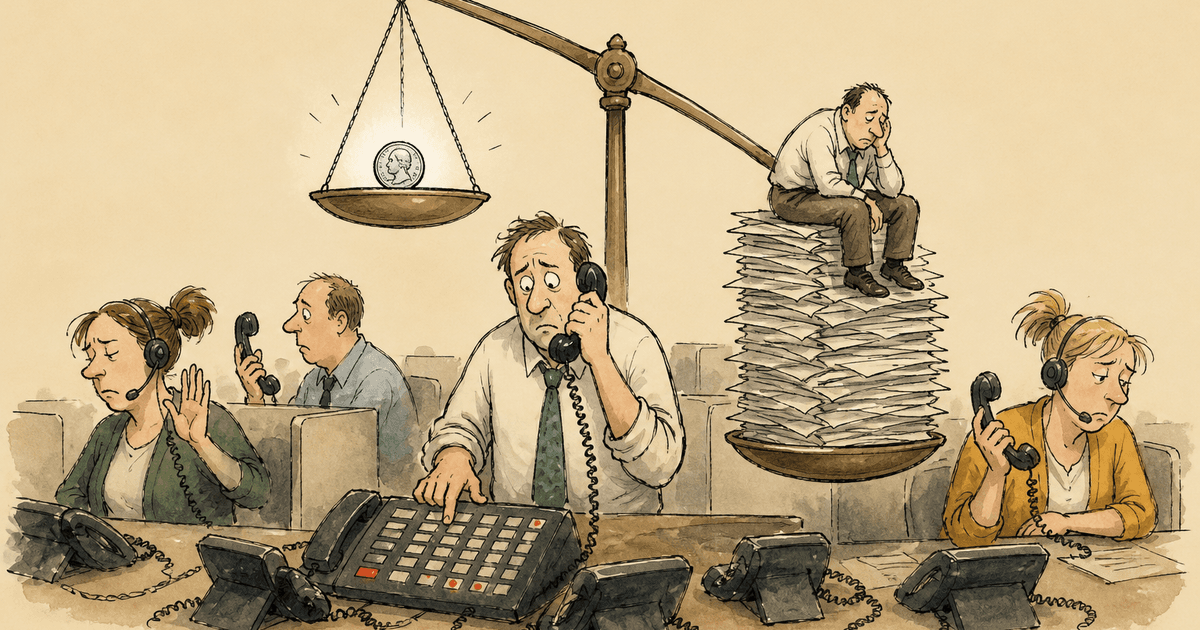
Aged leads look like the smart discount play until you price the labor. The same record that costs a dollar and change needs eight to ten times the dials and converts at a fraction of the rate. Your effective cost lands around thirteen dollars, not three.
TL;DR
Aged leads are not cheaper. They are a labor swap disguised as a lead discount.
An aged lead trades a low sticker price for a brutal contact curve. You burn more dials to reach fewer people, close them at a third of the real-time rate, and carry real TCPA and DNC exposure on data the consumer barely remembers opting into.
Key Takeaways
- Real-time P&C leads run 4 to 8 dollars; aged data sells for a fraction but needs 8 to 10 times the dials to reach a decision maker.
- The effective cost per aged lead lands near 13 dollars once labor and close rate are priced in, not the 1.50 sticker.
- A public-list cold caller needs a full sale to absorb roughly 320 dollars in loaded labor, so the math only works in one narrow niche.
- Aged leads multiply do-not-call risk because the consumer forgot they ever opted in, so cap them near 10 percent of total lead spend.
Why do aged leads feel cheap until the dial count catches up?
The price is real. The intent is gone. An aged lead is a real-time record sold later at a deep discount, and once the data passes 90 days the phone numbers have been reassigned and the consumer has usually already bought.
The National Insurance Producer Registry tracks the licensing pipeline, but neither it nor any lead vendor can restore the intent a record loses when it sits. A lead that answered a quote form four months ago is not still shopping. They moved on, and the contact rate collapses below 10 percent where real-time first-day contact runs 22 to 28 percent.
What looks like a bargain is really a dialing tax. Real-time data converts at 6 to 9 dials per unique contact. Aged data runs 50 to 80. The line-item savings evaporate the first time a caller grinds through 70 dials to reach a single person who already bought elsewhere.
What is the real cost per lead after you price the labor?
The sticker number is a distraction. The only number that matters is the effective cost per lead once dials, contact, quote, and close are all priced in, and that number moves against you hard on aged data.
A co-opt or aged lead at 1.50 looks cheaper than a real-time lead at 6. But it takes three times the dials and converts at a third of the rate. Run the math and the effective cost per lead lands around 13 dollars against a worse close. You paid more for a lead that was never going to close at a healthy rate in the first place.
This is the same curve logic mapped in our post on the 90-day producer cost-per-sale curve. The cheap data does not bend the curve in your favor. It pushes the steady-state cost per sale above the 120 dollar ceiling that signals a process failure instead of a lead failure.
Why does the dial labor math make public lists negative on return?
Because a cold list has no opt-in and no intent, and labor is the whole cost. Run a single caller on 500 dials at a 1 percent contact rate and you get 5 contacts. At a 10 percent quote rate that is half a quote, and at a 20 percent close rate you land one sale every two days.
That one sale has to absorb two full days of loaded labor. At 20 dollars an hour for 16 hours you are at 320 dollars per sale before commission, software, or owner time. The producer failure rate data shows most agencies lose producers in the first few years, and feeding them dead lists accelerates exactly that burnout.
The only place this math works is a high-net-worth niche where a single sale absorbs the inefficiency. Everywhere else it is a donation to your dialer bill. SHRM puts a bad hire at 50 to 75 percent of annual salary, and a caller loading 320 dollars per sale into dead data is burning through their own value.
What is the compliance exposure hiding inside aged data?
Do-not-call risk is not a footnote. It is the silent multiplier that turns cheap data into an expensive settlement.
Consumers forget they opted in. Litigators actively farm aged-lead lists looking for compliance gaps, and every record without a verifiable Digital Certificate for consent is a live risk. A single settlement wipes the margin from several sold policies, which is why the rule is to treat missing certificates as do-not-call and scrub every batch against national and state lists.
The NAIC publishes the licensing and regulatory framework, and the Insurance Information Institute tracks the industry employment picture behind it. Neither resolves the core problem: aged data multiplies your compliance surface while delivering the weakest intent.
Where does aged data actually belong in the lead budget?
Nowhere near a primary source. The disciplined answer is to cap aged and co-opt spend at 10 percent of total lead budget and isolate it in a separate caller pool so it protects real-time team morale.
Top-performing agencies measure acquisition cost at the source level, and the Best Practices Study benchmarks exactly that discipline. Reagan Consulting reinforces the same point across their productivity research. Cornell ILR ties compensation and turnover to retention, and dead data is a turnover accelerant in disguise.
The producer failure-rate pattern we mapped earlier is the predictable outcome of feeding good closers bad data. Keep aged data as a warmup queue for a dedicated team, never the engine.
How do you tell the difference between a process failure and a lead failure?
Watch the ratio, not the absolute cost. If your effective cost per lead is rising toward 13 dollars while dial count is climbing and contact is flat, that is a lead quality problem. Kill the source.
If real-time cost per sale is stable between 30 and 80 dollars and your closers are hitting 8 to 10 quoted households a day, the leads are fine and the curve in our CPS analysis is working as designed. Anything above 120 dollars steady state means the process is broken, not the data feed.
Sources cited in this analysis?
- The Wedge Group - Producer failure rate
- SHRM - Cost of a bad hire
- Big I - 2025 Best Practices Study
- Reagan Consulting - Research publications
- Insurance Information Institute - Industry overview
- NAIC - Licensing and regulation
- The Institutes - Producer development
- Cornell ILR School - Compensation and turnover
Frequently Asked Questions
Are aged leads ever worth buying at all?
Aged data works in exactly two narrow lanes: an overseas dialer under 4 dollars an hour on loaded labor, or an automated SMS-first cadence with a tight opt-out. Outside those, cap it near 10 percent of spend and treat it as a warmup queue, never a primary source.
Can I mix aged data with real-time leads in the same queue?
Do not mix them. Isolate aged data in a separate caller pool so the morale of your real-time team stays intact, and so the contact-rate math is not averaged in a way that hides which source is actually paying off and which one is quietly bleeding you.
What is the fastest way to spot a bad aged-lead vendor?
Check the consent certificate on a sample batch before you dial. A vendor that cannot produce a verifiable Digital Certificate for a record is selling compliance risk, not a lead. Treat any record without one as do-not-call and move on.
Should I ever turn the real-time faucet off to save money and lean on aged data?
Never. Turning off real-time intent to save a few dollars on sticker price is exactly how an agency turns a working cost-per-sale curve into a process failure, and it is the decision that stalls most first-year producers before the dial sequence ever matures.