
The Real Cost of a Bad Producer Hire: $150K or More
By Craig Pretzinger and Jason Feltman
A bad producer hire costs an agency between $75,000 and $250,000 when you account for salary, benefits, training, management time, lost revenue, and the replacement cycle. Most owners only count the wages, and that is why the same mistake repeats. Fix the math before you fill the seat.
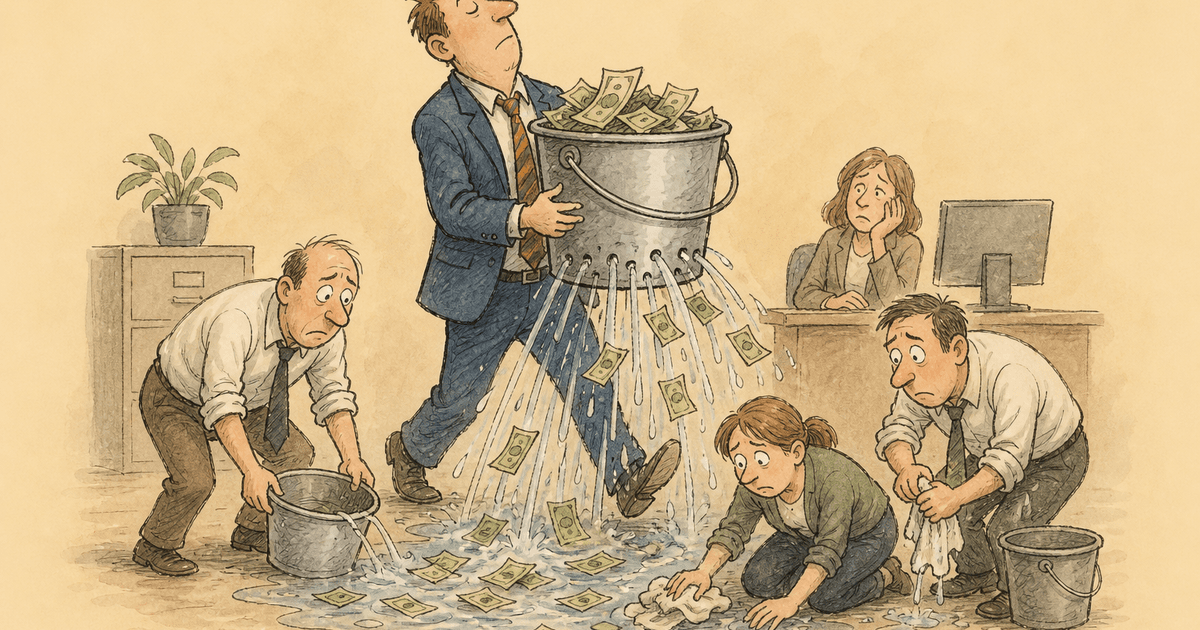
Most agency owners total a bad producer hire by the paychecks they wrote and move on. That number is off by a factor of three. The real weight drags on your margins for years.
TL;DR
A bad producer hire is not a $60,000 mistake. It is a $150,000 wound that bleeds through salary, training, management hours, and lost pipeline revenue. The data says 72.3 percent of new producer hires fail. The agencies that beat that use structured hiring, a DISC screen, and a ramp measured in activity. Fix the math before you fill the seat.
Key Takeaways
- A single failed producer hire costs $75,000 to $250,000 in direct wages, lost revenue, management time, and team disruption.
- 72.3 percent of new producer hires fail when they lack a structured sales process and clear account targets.
- The hidden costs of management time, CSR burnout, and pipeline decay often outrun the producer's salary.
- Running a DISC behavioral screen before the first interview cuts most mis-hires at the top of the funnel.
Why do most agency owners underestimate what a bad producer hire actually costs?
Ask most owners what a failed producer cost them. They will give you the base salary. Maybe $70,000 with benefits. They write it off and keep going.
"I paid him for a year and a half and he never produced. Cost me about 70 grand." That is how most owners total it up. That number is maybe a third of the real damage.
The SHRM benchmark says replacing an employee costs 50 percent to 200 percent of their annual salary. For a $60,000 base, that puts replacement between $30,000 and $120,000. And that is before you add the premium they never wrote. A producer who never produces costs you the salary plus the revenue that never materialized. That second number is always heavier.
The Wedge Group, with 33 years of data across 8,000-plus producers, puts the true cost of a failed producer at $75,000 to $250,000. Their breakdown covers base salary, benefits, recruiting, training, management time, and the accounts never prospected.
But the number that lands hardest is the team cost. When a producer washes out, the other producers inherit the dead pipeline. The CSRs field calls from orphaned accounts. The owner lost months coaching a failing hire instead of building the producers who were actually closing.
What makes a producer hire a bad hire in the first place?
The failure is almost never about intelligence or work ethic. The Wedge data points to no repeatable sales process and wrong account targeting as the top two causes. New producers get a territory and are told to prospect. They default to whatever felt natural in their last job.
Without a defined process, they burn time on accounts too small to matter or too large to close. The third killer: no strategy to displace the incumbent. Eighty to 90 percent of accounts worth winning already have an agent. A producer without a displacement framework burns a year of calls before they see it.
The management layer makes it worse. HBR research on hiring failures finds that most organizations understand the consequences of a bad hire but still rush to fill seats without a structured process.
Put the wrong person in a producer seat under a manager never selected for management talent. The failure is near certain before the first dial. This is a hiring system problem, not a producer problem.
What is the full line-by-line cost of a failed producer?
Here is the math on a $60,000 base producer who washes out at 18 months. Cornell ILR research on sales compensation and turnover validates these cost ranges, and the O*NET occupation profile confirms real salary ranges for insurance sales agents nationally.
- Base salary for 18 months: $90,000.
- Benefits and payroll taxes at 30 percent: $27,000.
- Recruiting and hiring costs: $5,000.
- Training, licensing, carrier events: $8,000.
- Management and coaching time: $12,000.
- Lost revenue from unworked accounts: $40,000.
- Replacement hiring cycle: $5,000.
That lands at $187,000. Drop the base to $45,000 and you are still north of $140,000. Push it to $80,000 and the ceiling passes $220,000. The salary is the smallest line on the list.
The Insurance Journal 2026 Agency Salary Survey shows producer total income rose 25.3 percent in 2025. Producer compensation models from the Big I Best Practices study confirm the structural squeeze between paying competitive producer splits and maintaining agency profitability. Every failed hire resets the clock at a higher sticker price.
Then there is the cost that never hits a spreadsheet: morale damage. The remaining producers inherit a lukewarm pipeline. CSRs absorb the service load from the partial book. The owner restarts recruiting from zero while the team carries an empty seat. That weight compounds across every hiring mistake.
How do agencies that beat the failure rate hire differently?
It is not a better interview. It is everything before the interview.
Agencies that beat the 72.3 percent failure rate run a behavioral screen first. A DISC assessment before any conversation identifies drive, influence, steadiness, and compliance. Closers need high-D, moderate-I. The screen removes bad fits before the owner invests time in a resume review.
The second piece is a ramp measured in activity, not premium. Judge a new producer on dials, contacts, and quotes for the first 12 months. Measure premium too early and you will fire producers who would have closed in month 13.
The math: 500 dials per day at 20 percent contact rate generates 100 conversations. At 10 percent quote rate, that is 10 quoted households per day. At 20 percent close, that is 40 sales per month. The math works if you judge the inputs.
The third piece is a defined sales process with a specific strike zone. The producer knows which accounts to target and what to say on the first call. No producer left to invent a sales methodology from scratch.
Sources cited in this analysis?
- SHRM - The Cost of a Bad Hire Can Be Astronomical - Replacement runs 50% to 200% of annual salary.
- Independent Agent - Producer Compensation: A Base/Growth Model - Big I Best Practices research on comp models and agency profitability.
- The Wedge Group - 72.3% of Insurance Producer Hires Fail - Failure rate and full cost breakdown.
- HBR - 6 Red Flags That Keep Good Candidates from Getting Hired - Hiring consequences and interview-process research.
- Cornell ILR School - Sales compensation, turnover cost, and behavioral assessment research.
- O*NET - Insurance Sales Agents - National occupation profile with salary and employment data.
- Insurance Dudes - Finding and Keeping the Best Agents - Turnover costs 75-150% of salary per lost producer.
Frequently Asked Questions
How quickly should a new producer break even?
Expect break-even at 12 to 18 months on a structured ramp. Measure activity metrics, not premium, for the first year. A producer hitting 500 dials and 10 quoted households per day is on track. Fire on dials, not closed revenue before month 13.
What is the single biggest predictor of a failed producer hire?
No defined sales process and no account strike zone. Producers handed a territory with no targeting framework, no call script, and no displacement strategy fail at the 72.3 percent rate. The same producer with structure and daily activity tracking succeeds at the 80 percent rate, according to the Wedge data.
How do you fund a new producer without bleeding margin?
Reserve 12 to 18 months of base salary and benefits before the first offer letter. Keep that reserve in a separate account, not in operating cash. If you cannot fund the full ramp from reserves, you cannot afford the hire. A draw against future commission only works with an existing pipeline.
Should I use a DISC assessment before the first interview?
Yes. Run the DISC screen before any human conversation. The profile identifies drive, influence, steadiness, and compliance traits that predict role fit. The screen costs less than one day of a bad hire's salary and removes mis-fits before you invest time in an interview.
What is the fastest way to recover from a failed producer hire?
Do not hire the same profile faster. Run a post-mortem on the failed hire to determine whether it was a process failure or a person failure. If the producer had no sales process or activity tracking, the next one will fail the same way. Fix the system first, then restart recruiting.