
When Experienced Hires Have Terrible Judgement at Work
By Craig Pretzinger and Jason Feltman
An experienced hire making bad calls is usually a structure failure, not a lost cause; a veteran with no written scope of authority defaults to the last shop's habits. MarshBerry warns poor year-one performance predicts year-three failure. Give them a decision doc, not a lower bar.
Why Doesn't an Experienced Hire's Resume Predict Their Judgment?
He had 12 years in commercial lines, knew the carriers, knew the markets, and knew how to write business. You brought him on thinking you could hand him a segment and walk away.
Three months later you're reviewing every quote he sends because the last two had coverage gaps that a client caught before you did. Here's what makes this particular flavor of frustration so heavy: it's not the work of managing him that's exhausting. It's realizing that you trusted the resume to predict the judgment, and it didn't, the exact over-reliance the EEOC guidance on employment tests and selection procedures warns against.
Nathan Glass on the Insurance Dudes nails the early warning sign: "How candidates describe their past employers predicts reliability." The person who calls every previous agency disorganized or unfair isn't describing those agencies. They're describing a pattern that follows them around. Most owners notice that signal in hindsight.
TL;DR
An experienced hire making bad calls is usually a structure failure, not a lost cause; a veteran dropped in without a written scope of authority defaults to whatever they did at their last shop. MarshBerry is blunt that poor performance in year one is the strongest predictor of non-performance at year three, and lowering the bar because someone is experienced just postpones the inevitable instead of fixing it.
Build a one-page decision doc with three columns (what they can decide alone, what needs a second set of eyes, and what requires you), then diagnose whether you have a training gap, a system gap, or a judgment gap, because only the last one lacks a structural fix. Before adding oversight, run the diagnostic conversation: "I reviewed your last three submissions, two had coverage gaps, walk me through your decision process," and let the answer tell you which gap you are in.
What Does Year-One Performance Predict for an Experienced Hire?
MarshBerry's research on producer expectations lands on a hard conclusion: poor performance in year one is the strongest predictor of non-performance at year three. And here's the uncomfortable part: agencies that lower their standards instead of addressing the problem aren't being patient. They're just postponing the inevitable.
The "experienced hire" label creates a trap. Because they arrived with credentials, you attribute early judgment problems to transition friction. They're still learning your systems.
Give it another quarter. MarshBerry is blunt about this: "Adjusting expectations becomes an excuse." The agencies that tolerate below-standard work from experienced hires longer than they would from newer producers are paying a premium to avoid a hard conversation.
Is Bad Judgment a Structure Problem or a People Problem?
Jack Wingate's work on discipline and systems hits the same note from a different angle: "Discipline without systems produces heroic effort that doesn't scale." Flip that around and it's just as true. An experienced hire dropped into an agency without clear decision structures will default to whatever they did at their last shop, or just make it up.
You won't see the problem until a client calls. By then the decision was already made.
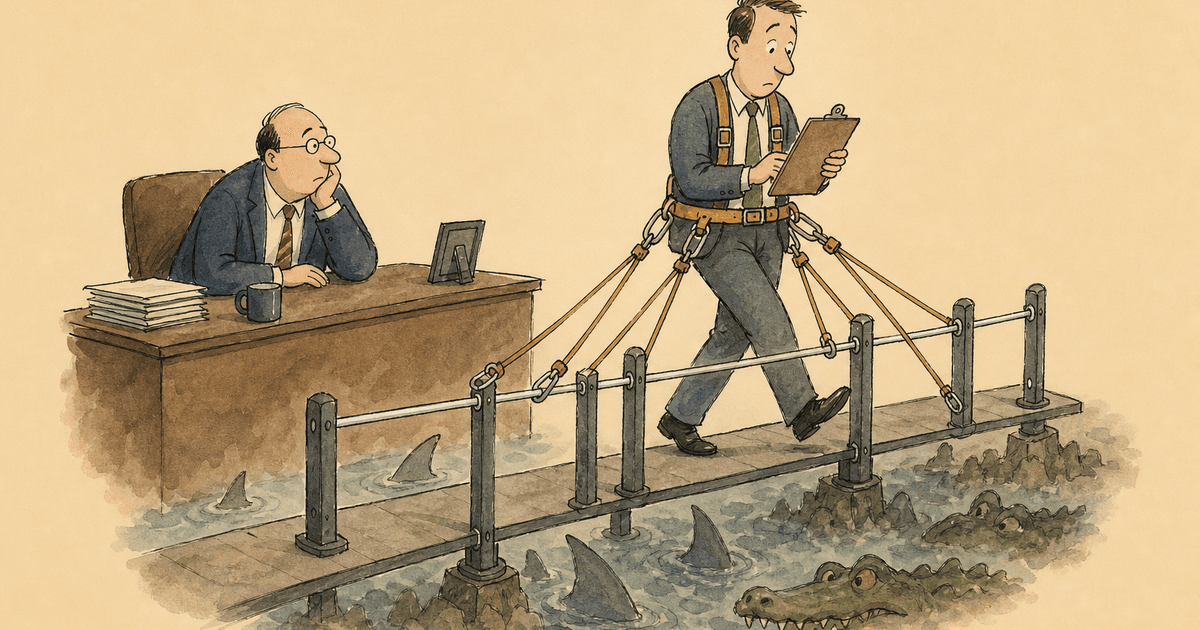
This isn't an indictment of the hire. It's a structural failure. An agency that expects experienced people to run autonomously without first spelling out what "within scope" and "needs approval" look like in writing is building the exact problem it's trying to avoid.
The fix isn't tighter supervision. It's a documented scope of authority:
Write a one-page decision doc. Three columns. Decisions they can make without asking (standard renewals, preferred carriers, premiums under a threshold). Decisions that need a second set of eyes (E&S markets, new commercial clients above a floor, anything outside preferred carriers).
Decisions that require you (non-renewal recommendations, E&O-adjacent coverage calls, carrier disputes). When that doc exists and gets signed on day one, accountability is structural, not personal.
The experienced hire doesn't feel micromanaged. They feel oriented.
How Should You Confront an Experienced Hire's Bad Judgment?
Nathan Glass's partnership framework applies here: "A partnership that feels slightly off always gets worse." He's talking about formal partnerships, but the dynamic is identical with a senior producer. The owner who says "something is off but I can't name it" is almost always right.
What follows is predictable: you keep adjusting scope, adding oversight, hoping the friction resolves. It rarely does without a direct conversation about the specific behavior causing the problem.
The conversation most owners duck: "I reviewed your last three submissions. Two had coverage gaps. Walk me through your decision process on those."
Not an accusation. A diagnostic.
The response tells you whether this is a training problem, a system problem, or a judgment problem. Only one of those doesn't have a structural fix.
How Do You Hold an Experienced Hire Accountable Without Micromanaging?
Seth Preus's accountability research argues that high accountability actually reduces anxiety rather than creating it. When expectations are explicit and tracked, people know where they stand. The anxiety comes from ambiguity, not from someone watching.
For an experienced hire with judgment issues, weekly check-ins framed around decision quality (not output volume) do two things. They surface problems before clients find them, and they give the hire a clear signal about whether their decision-making is meeting the bar.
Most experienced hires struggling with judgment don't even know the gap exists. They're running the same playbook that worked fine at their last agency. Weekly structured feedback closes that gap faster than annual reviews.
Agents on r/InsuranceAgent talk about this all the time: the experienced hire who "did it differently at their last place" and is genuinely confused when it creates problems. The resolution in the threads that end well is always the same: the owner got specific and built a written standard.
Is It a Training Gap, a System Gap, or a Judgment Gap?
Before you do anything with an experienced hire showing judgment problems, figure out which bucket you're actually in: Training gap. They don't know your specific markets, carriers, or systems well enough yet. Fixable with a structured 90-day onboarding that covers those gaps, regardless of experience level. System gap. Your agency doesn't have documented decision authority, so they're improvising.
Fixable with the scope doc above. Not their fault. Judgment gap. They have the training and the systems and they're still making decisions a competent professional wouldn't make.
This one requires the direct conversation, a documented improvement plan with specific standards, and a clear timeline. MarshBerry's data is clear: this category doesn't fix itself with more time. The assumption that experienced people can run without structure is the most expensive assumption in agency management.
Wingate's framework is useful here: the structure isn't for you. It's what makes autonomous operation possible. An experienced hire with good judgment and a clear scope doc will ask fewer questions, not more.
The one with poor judgment will at least have their decisions visible to you before they reach the client. That's the difference between carrying a problem and managing one.