
How to Stop DISC Conflict Pairs From Wrecking Your Team
By Craig Pretzinger and Jason Feltman
Clashing DISC profiles are a communication mismatch with a specific fix, not a personality problem. The two pairs that collide most are the high-D producer with the high-S service agent, and the high-C analyst with the high-I closer. Map each pair, name the gap, then run one repeatable play per pair so friction becomes productive tension instead of churn.
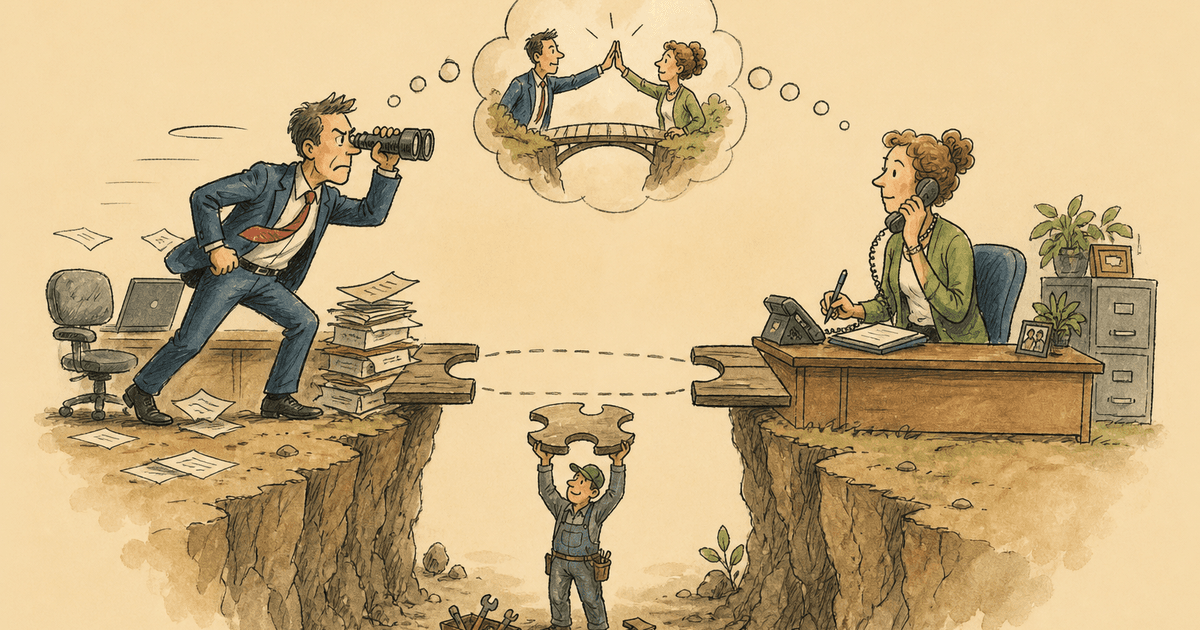
Two people on your team keep butting heads, and until now you have called it a personality clash. It is heavier than that. One of them is wired fast and blunt, the other slow and careful. Neither is wrong, and the friction is costing you every week.
TL;DR
Clashing DISC profiles are not a people problem; they are a communication gap with a name and a fix. The two pairs that collide most in an agency are the high-D producer against the high-S service agent, and the high-C analyst against the high-I closer. Each pair gets one repeatable play: give the high-S a written decision frame and give the high-C a numbers-not-stories channel. Name the gap out loud, run the play for a month, and the same friction that was burning meetings becomes productive tension you can see on the dashboard.
Key Takeaways
- Unmanaged conflict between opposite DISC profiles costs real money through slower decisions, lost service flow, and the turnover that follows.
- The high-D and high-S pair collides on pace and bluntness, while the high-C and high-I pair collides on detail versus story.
- One written decision frame for the high-S and one numbers-first channel for the high-C resolves most pair friction without moving anyone.
- A fifteen-minute pair mapping session names the gap so both people stop reading the other as the problem.
Why Do Two People at Opposite Ends of the DISC Map Collide?
The DISC framework measures four behavioral tendencies: Dominance, Influence, Steadiness, and Conscientiousness. Two people can share a goal and still read the same conversation completely differently, because each is wired to process information, handle pressure, and make decisions their own way. The friction is not character. It is two operating systems running the same task at different speeds.
The clearest sign is the recurring loop. The high-D wants a decision now; the high-S wants the decision to land softly so nothing breaks. The high-C wants every fact on the table before moving; the high-I wants the story and the room to run. Left unlabeled, each side starts reading the other as sloppy, slow, harsh, or scattered.
That is where the money leaks. Cornell ILR research ties worker conflict and turnover directly to a measurable drop in the customer service your clients feel. You are not just refereeing two people; you are paying for the friction every single week.
What Does a High-D and High-S Pair Actually Look Like?
Picture your producer walking a renewal into the CSR's desk twice before lunch, each time needing an answer in the next twenty minutes. The producer reads the CSR's careful pause as stalling. The CSR reads the producer's bluntness as pressure with no room to breathe.
Both are doing their job. The high-D is built to force movement; the high-S is built to protect the relationship and the process. Neither is wrong, which is exactly why the fight never resolves itself.
The way most owners say it: the producer thinks the CSR is sandbagging, and the CSR thinks the producer is going to blow up a client account with a half-checked endorsement. Both are right and both are wrong at the same time.
The Insurance Dudes put this plainly: DISC describes behavior, not performance. A high-S agent is not refusing to move; she is asking for a frame that makes the move safe. That is the whole point of using DISC for management instead of personality labels. Stop coaching for speed. Give her the frame instead.
How Do You Defuse the High-D and High-S Pair?
Run the same play every time the tension spikes. It has four moves you can write on an index card.
- Hand the high-S a written decision frame, not a spoken deadline.
- Name the pacing out loud so both people hear the gap is structural, not personal.
- Route the producer's quick requests through a batched handoff block instead of the desk.
- Check in weekly so the pattern holds instead of snapping back to the old loop.
The written frame is the heaviest lever. A high-S given "flag any endorsement over fifteen percent by end of day" moves fast because the rule is on paper. The same request delivered verbally reads as pressure and stalls. A clear decision frame turns a friction pair into a working handoff, and it costs you nothing but ten seconds of writing.
What About the High-C and High-I Pair?
The second collision is quieter and just as expensive. The high-C analyst wants every number verified before a recommendation leaves the desk. The high-I closer wants the story in the client's language and the room to run on momentum. The analyst hears sloppiness; the closer hears bureaucracy.
The fix is a numbers-first channel for the analyst and a story-first channel for the closer, not a debate about who is more careful. Give the high-C the data file first, then the meeting. Give the high-I the client narrative first, then the guardrails.
The teams that hold up under pressure are the ones that name how each teammate processes information instead of pretending everyone is identical. That is the entire job in one sentence: name the gap, then give each side the channel it already trusts.
How Do You Run the Pair Mapping Process?
Pull the pair into a fifteen-minute session you control. It is a procedure, not a feelings meeting.
- Put both profiles on the table and read the two tendencies out loud.
- Ask each person where the other's wiring reads as a problem.
- Write down the single biggest gap, in one sentence both people sign off on.
- Pick one named play from above and agree to run it for thirty days.
- Schedule the follow-up before anyone leaves the room.
That follow-up is the part owners skip, and it is the part that makes the play stick. SHRM's conflict guidance is blunt: conflict stays managed only when leadership builds a standing structure for it rather than firefighting it. One session fades in a week. A standing thirty-day rhythm holds.
Sources cited in this analysis?
- Wiley - Everything DiSC Assessments
- SHRM - Managing Conflict in the Workplace
- Harvard Business Review - Prevent Team Friction from Turning into Dysfunction
- Cornell ILR School - Worker Turnover Hurts Customer Service
- Wikipedia - DISC Assessment
- Insurance Dudes - DISC Profiles and Producer Hiring
Frequently Asked Questions
Does a High-D Producer Need to Soften Their Delivery?
No. Softening a high-D producer just makes the message land fuzzy and reads as weak leadership. Keep the directness. The fix is on the receiving side: hand the high-S a written frame so the blunt request arrives as a rule, not as pressure.
Can a High-S Agent Push Back Without Burning the Relationship?
Yes, when you give her a scripted form for it. A high-S will not challenge a deadline face to face. But she will write back a one-line flag on a checklist. Build the pushback into the written process and it becomes service, not conflict.
Should I Reassign Someone to a Different Pair?
Only after the named play fails twice. Moving a high-S away from a high-D keeps the friction from repeating, but it also hides the real gap and teaches the team that clashing profiles get split instead of managed. Run the play first, then reassign only if the written frame and the thirty-day rhythm both break.
Is This the Same Thing as Building a Balanced Team?
It is the flip side. Team composition is about who you hire next. Conflict pairs are about who is already there and how you stop the daily friction. You can run both at once, but they are different jobs with different timetables.