
What to Pay a New P&C Producer in 2026 (Real Math)
By Craig Pretzinger and Jason Feltman
The number that wins is not the biggest salary. Entry-level producers average $32,977 in total comp, but a draw-plus-commission structure can earn a producer $45,000 to $55,000 in year one while the agency breaks even by month 14. Use a recoverable draw and a widening new-versus-renewal split.
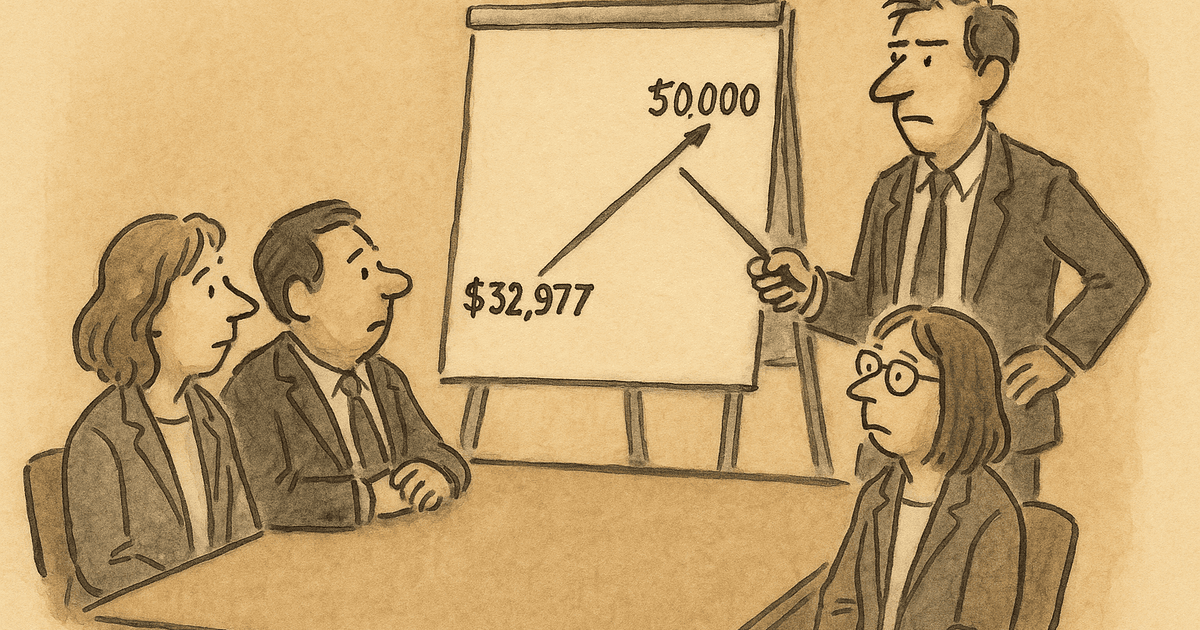
A brand-new P&C producer with no book should earn $35,000 to $55,000 in total year-one pay, built on a recoverable draw against commission with a 35 to 40 percent new-business split and a 20 to 25 percent renewal split. Structure beats a fat salary.
TL;DR
The number that wins is not the highest salary. It is a $35k to $45k recoverable draw, a 40/25 new-vs-renewal commission split, and a clear validation timeline. Entry-level insurance producers average $32,977 in total comp.
Producers saw a 5 percent jump in total comp industry-wide last year. If you are paying the same split on new and renewal business, you are 11 to 12 points behind top-performing firms who push the gap to 15 to 20 percent.
Structure the plan right and you break even on a new producer by month 14. Structure it wrong and you are carrying a draw and getting zero production.
What Does a New P&C Producer Actually Earn?
The data tells a clear story if you look past the averages. PayScale puts entry-level insurance producer total compensation at $32,977, covering base, bonus, commission, and profit sharing. That is the full picture for someone with less than one year of experience: 65 reported salaries nationwide.
The BLS pegs the lowest 10 percent of insurance sales agents at under $36,390 annually, with a median of $60,370. But here is the thing most agency owners miss when they look at those numbers. The BLS median includes experienced producers with mature books, captive agents with carrier-supplied leads, and independents running six-figure renewal streams.
A brand-new producer in an independent agency does not look like the median. They look like the bottom quartile, and for the first 12 to 18 months, they look like a cost center. The Insurance Journal 2026 Agency Salary Survey confirms producers and sales roles saw a 5 percent jump in total compensation from 2024 to 2025, with salary increases averaging 21 percent.
That is the market moving. If you set your offer at last year's benchmark, you are already behind.
But "behind" does not mean throw money at the problem. It means structure the number smarter.
What Is the Right Draw Amount for a New Producer?
A recoverable draw in the $35,000 to $45,000 range keeps a new producer alive while they build pipeline. That is roughly $2,900 to $3,750 per month before commissions kick in. The keyword is recoverable.
The agency fronts the cash against future commissions. If the producer writes business, they earn out of the draw and start stacking commissions above it. If they do not write business, the draw sits on the books as a liability you eventually write off.
Some owners hear "recoverable draw" and picture a broke 24-year-old eating ramen for six months. The math does not require that. At a 40 percent new-business split on a $1,800 average auto premium carrying a 12 percent agency commission, each household sold generates roughly $86 in new-business commission to the producer.
Sell 8 households per month by month six and you are earning $688 in commission on top of the draw. Sell 12 by month nine and the draw gets repaid and the producer is net-positive. MarshBerry's framework for new producer expectations maps this out by year: year one is about skill-building and pipeline construction, with new business numbers ramping as validation takes hold.
The firms that win set clear month-by-month activity targets, not just revenue targets. A new producer who makes 500 dials per week, books 12 appointments, and quotes 8 households is on track even if the January commission report looks thin. The one making 100 dials and waiting for referrals is a draw liability.
Should I Pay a New Producer Salary or Commission Only?
Salary-only is the fastest way to fund a non-producer for 18 months. Commission-only is the fastest way to wash out a new hire who had potential but could not cover rent in month four. The middle path is the draw-plus-commission structure with a defined validation schedule.
MarshBerry's research shows top-performing firms push the commission split gap between new and renewal business to 15 to 20 percent, compared to average firms at 11 to 12 percent. That gap is not just an incentive mechanism. It is a cash-flow tool.
Pay 40 percent on new business and 25 percent on renewals, and the agency keeps more renewal revenue to cover service staff, technology, and the next new producer hire. Look at the numbers side by side. At a flat 40/40 split on a $600,000 book producing $72,000 in annual agency commission, the producer takes $28,800 regardless of whether any new business was written.
At a 40/25 split, the producer still earns $28,800 if they are writing new business, because the new-business commissions carry the weight. But the agency now retains an extra $10,800 from renewals that goes directly to service support and growth infrastructure. The spread funds the machine.
The Insurance Journal survey found producer satisfaction with compensation rose to 3.20 out of 5 in 2025, up from 2.96 in 2024. Producers are not asking for a flat split.
They are asking for a structure that rewards output. The ones you want to hire already know the difference between a job that pays for attendance and a plan that pays for production.
What Does a New Producer Validation Timeline Look Like?
Validation is the point where the producer's commissions cover their draw and the agency stops losing money on the hire. MarshBerry recommends mapping specific new business expectations by year, with year one focused on skill acquisition, year two on pipeline conversion, and year three on full validation. A realistic validation schedule for a brand-new producer in personal lines or small commercial looks like this:
Months 1 to 3: Draw-only with activity minimums. The producer is licensed, trained, and dialing. They should generate 2 to 4 quoted households per week by the end of month three.
The agency is fully funding this period. Expect negative cash flow of $3,000 to $3,750 per month. Months 4 to 6: Draw plus early commissions.
The producer hits 6 to 8 quoted households per week. Monthly commission earned begins offsetting the draw. The agency cash bleed slows to roughly $1,500 to $2,000 per month.
Months 7 to 12: Commission exceeds draw in most months. The producer is quoting 8 to 10 households per week with a 15 to 20 percent close rate. The draw is being repaid.
The agency approaches break-even by month 12 to 14. Year two: Full validation. The producer's book begins renewing, the renewal commission stream starts, and the new-business engine is self-sustaining.
The agency is net-positive on the hire. MarshBerry notes that when producers struggle, it typically becomes apparent in year one.
Do not wait until month 18 to address a producer who is not hitting activity targets. The draw structure forces a decision point: by month six, you have enough data to know whether the trajectory works or whether the role is a mismatch.
How Much Does It Actually Cost to Hire and Lose a Producer?
A bad hire costs at least 30 percent of the employee's first-year earnings, according to the U.S. Department of Labor. On a $45,000 draw, that is $13,500 in direct costs before you factor in the soft damage: the accounts that went unquoted, the pipeline that never materialized, and the owner time spent recruiting, training, and unwinding the relationship.
The insurance industry is already fighting a structural talent shortage. Roughly 400,000 insurance industry positions are projected to go unfilled over the next decade as retirements accelerate. About 50 percent of the current insurance workforce aged 55 and older will retire by the early 2030s.
The Jonus Group, which places over 2,000 insurance professionals annually, identifies compensation as a primary lever in a tightening talent market. This is not a market where you can lowball and wait for applicants.
It is also not a market where you can pay a flat 40/40 split and hope production materializes. The agencies winning the talent game are the ones with a structured plan: draw, split gap, validation timeline, and activity minimums, all communicated before the offer letter goes out.
What Happens When Two Agencies Hire a Producer One Year Apart?
Picture two agencies hiring the same week. Both bring on a newly licensed producer with no book. Agency A offers a $48,000 salary, a flat 40/40 split, and tells the producer to "get out there and build relationships." By month six, the producer has written 12 households.
The draw has been fully paid by the agency with zero offset. The producer feels comfortable. The agency owner feels the weight of a $24,000 hole with no pipeline velocity behind it.
Agency B offers a $40,000 recoverable draw, a 40/25 split, and hands the producer a daily activity card: 100 dials, 4 appointments, 2 quotes. Week one, the producer knows exactly what a completed day looks like. By month six, the producer has written 18 households.
The draw is half-recovered. The owner can see the math working. By month 14, the draw is fully repaid and the producer is earning above it every month.
Same starting point. Different structure. Best Practices firms tracked by Reagan Consulting and the Big I posted 10.7 percent organic growth while maintaining historically high profit margins.
They do not do it by paying more. They do it by paying more for the right things.
What Should You Do This Week?
If you are hiring a new producer or planning to, here is the play. Write the offer with a recoverable draw, not a salary. Set the split at 40 percent new business and 25 percent renewal.
Build a 90-day activity scorecard with daily dial targets, weekly quote minimums, and monthly close expectations. Hand the candidate the validation timeline during the interview, not after the hire. The producers who lean in when they see the structure are the ones you want.
The ones who ask how to get the draw without the dials will save you a $13,500 mistake before it starts. The number that wins is not the biggest number. It is the number attached to a plan.