
5 Red Flags in a Producer's First 30 Days on the Job
By Craig Pretzinger and Jason Feltman
You can spot a failing producer hire by day 14, not month six. Five patterns surface in the first 30 days, ending in no pipeline by day 21 and blame shifted outward. With one in five producers gone inside 45 days, two together is a trajectory.
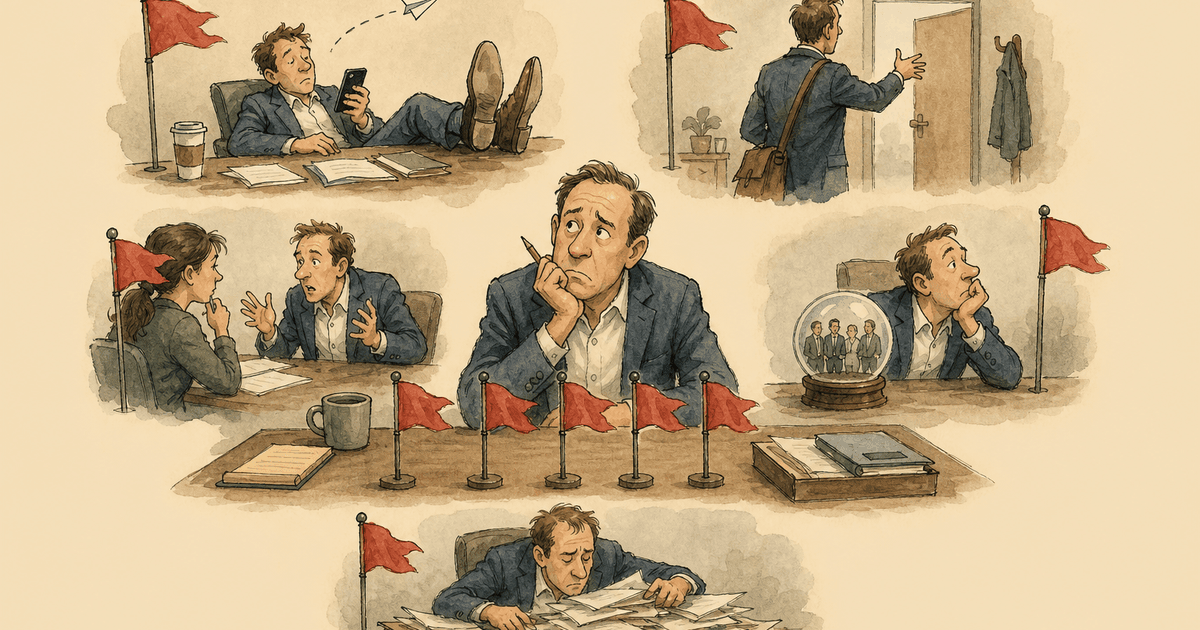
Which Early Warning Signs Show Up in a Producer's First 30 Days?
The producer failure rate pattern is the pillar piece on why most new producers wash out. This checklist is the early-detection companion: the five warning signs that surface in your hire's first 30 days, weeks before that pattern finishes playing out.
Two weeks in and you can feel it: the new producer is present but not moving, the calls aren't happening at the pace you expected, and the questions being asked aren't the right questions. Something in the onboarding isn't catching.
You tell yourself it's early. Give it another month. Pulling the plug at two weeks feels premature.
SuperAgent's data shows roughly 20 percent of new producers exit within their first 45 days. That means the signals were visible well before the exit, the kind of early turnover Cornell ILR research ties to weak onboarding and supervision. The agency just wasn't watching for them.
Here are five patterns that show up in the first 30 days. Any one is worth a direct conversation. Two or more together is a trajectory you need to address now, not at the 90-day review.
TL;DR
You can tell a producer hire is failing by day 14, not month six, and the agencies that wait for proof pay for the delay. Roughly 20 percent of new producers exit within their first 45 days, which means the warning signs were visible weeks before anyone acted on them. Five patterns show up inside the first 30 days: activity that never starts, premature resistance to your process, questions that stop after week one, no self-generated pipeline by day 21, and excuses that shift blame outward.
Any one is worth a direct conversation, and two or more together is a trajectory, not a rough patch. Run a documented day-30 conversation that names what you see and sets a 60-day checkpoint, so you decide on data instead of hoping through month six.
Why Aren't the Activity Numbers Starting?
The first thing visible in week two should be activity. Not results. Activity.
Calls made, emails sent, connections initiated, carrier training completed. The specific number matters less than whether there's a number at all. Q4Intel's research identifies no formal sales process as a primary failure point.
But even in agencies with a defined process, the first trouble signal is a producer not executing at any volume. They may be "getting organized" or "building their list" or "studying the product," but the phone isn't ringing. The conversation here isn't punitive.
It's diagnostic. "Your log shows X calls in the last five days.
Target is Y. What's getting in the way?" The answer tells you whether this is a training gap (fixable), confidence gap (fixable with support), or motivation gap (much harder).
Is the New Hire Resisting Your Documented Process?
Every agency with a defined onboarding process will encounter the hire who wants to "do it my way." Sounds like initiative. Usually isn't.
Nathan Glass on the Insurance Dudes talks about attribution patterns: how someone describes past experience predicts how they'll operate in the next role. The producer who arrives with strong opinions about "the way I did it at my last agency" before understanding yours is often the same person who'll blame your systems when production doesn't materialize.
The signal isn't disagreement. Disagreement from someone who understands your system and has specific improvements is valuable. The signal is premature resistance from someone who hasn't earned the context to evaluate what they're resisting.
Why Did the New Producer Stop Asking Questions?
Week one, a new producer should be asking questions constantly. Product, process, clients, systems. "How does this work here?" is the sign of someone absorbing and building their operating model.
When questions stop abruptly in week two or three, it usually means one of two things. They believe they already know everything (almost never true at day 14), or they've disengaged from the learning process and are coasting without admitting they're stuck.
Seth Preus's work on accountability points at daily consistency as the predictor of long-term success. A producer whose engagement drops after week one is showing you a consistency pattern. That pattern will repeat in production activity, client follow-through, and relationship with accountability.
Does the Producer Have a Self-Generated Pipeline by Day 21?
By week three, a producer should have some form of self-generated activity happening. Not closed deals. Not even qualified prospects.
A list of people they've identified, contacted, or scheduled conversations with from their own effort. Not from leads you handed them. A producer who can only work provided leads is a closer, not a producer.
If you're hiring someone to build a book, the earliest signal of whether they can do it is whether they're doing it before anyone forces the issue. Insurance Journal's data on mentor success (70.3 percent with mentors) suggests this is coachable.
But the prerequisite is effort. If effort isn't there by day 21, coaching has nothing to work with.
Is the Producer Making Excuses That Shift Responsibility?
Listen for the difference between "I'm struggling with X and need help" versus "X isn't working because of Y." First is ownership. Second is attribution. Nathan Glass's Insurance Dudes episode covers early exit patterns from misaligned hires.
One of the clearest early signals is externalized attribution. The CRM is clunky. The carrier portal is slow.
The market is hard. The leads are bad. None of these are necessarily wrong.
But a producer whose early language is dominated by external barriers is showing you how they'll narrate a mediocre year: as something that happened to them. The conversation is direct: "What specifically are you going to do differently this week to move the number?" If the answer is another external barrier, you're watching the early phase of a hire that won't convert.
What Should You Do With the Red Flags?
The point isn't firing people at day 30. It's having the intervention conversation before month three, when the cost multiplies.
Q4Intel's framework shows agencies with defined onboarding checkpoints catch these patterns early. They either course-correct (saving a hire that would otherwise fail) or exit quickly (reducing total cost).
The day-30 conversation should be documented, specific, and forward-looking: here's what I'm seeing, here's what needs to change, here's the support available, here's the timeline. If trajectory hasn't shifted by day 60, you have enough data to decide rather than hope.
The 70 to 80 percent failure rate (Insurance Journal) includes every agency that waited until month six to acknowledge what was visible at week two. You don't have to be one of them.